Single-use plastic films used for packaging, produce wrap, and to-go bags make up 5 million metric tons, or ~46%, of all ocean plastic. These thin films are nearly impossible to recycle, and as such, are used once before throwing away (hence the term “single-use”). Replacing plastic films with more sustainable, nontoxic alternatives is an essential step towards turning off the tap of our plastic film pollution problem.
The TOM FORD Plastic Innovation Prize (PIP) (plasticprize.org) was catalyzing the development of innovative, market-ready replacements for thin-film plastic. Through partnering with Lonely Whale and New Materials Institute, we (Seattle Aquarium) scientifically assessed alternatives to plastic films. Eight finalists were selected to produce their plastic film alternative products to undergo a series of environmental exposure and lab-based tests. These tests helped the scientific advisory board determine which product both meets our consumer needs for plastics (like durability and flexibility) yet undergoes quick and safe degradation in environmental conditions.
Product testing in Seattle was done in temperate waters, which represent the vast majority of marine waters. This is exciting as this is the first time alternative plastics have been tested in colder waters. In addition, while products were exposed to both temperate and Caribbean waters (facilitated by New Materials Institute), we carried out an additional and novel laboratory test: Exposure to a gray whale’s stomach.

Now, you’re probably thinking “You’re feeding whales plastic film alternatives?!? That can’t be safe!” and you would be correct. We are able to simulate a gray whale gut without harm to any animals. There are four basic ingredients to mimicking a gray whale gut: heat, acid, enzymes, and agitation. Over the course of eight months, products were exposed to temperate waters, retrieved at pre-determined timepoints, and exposed to a simulated whale gut to assess how environmental exposure affects the digestive degradation and physical properties. Prior-to and post simulated gut, products were assessed in four tests: 1) tensile strength, 2) mass loss, 3) estrogenicity, and 4) electrical resistance. This series of tests is the first of its kind to assess products degrade if ingested after being in saltwater for varying amounts of time.
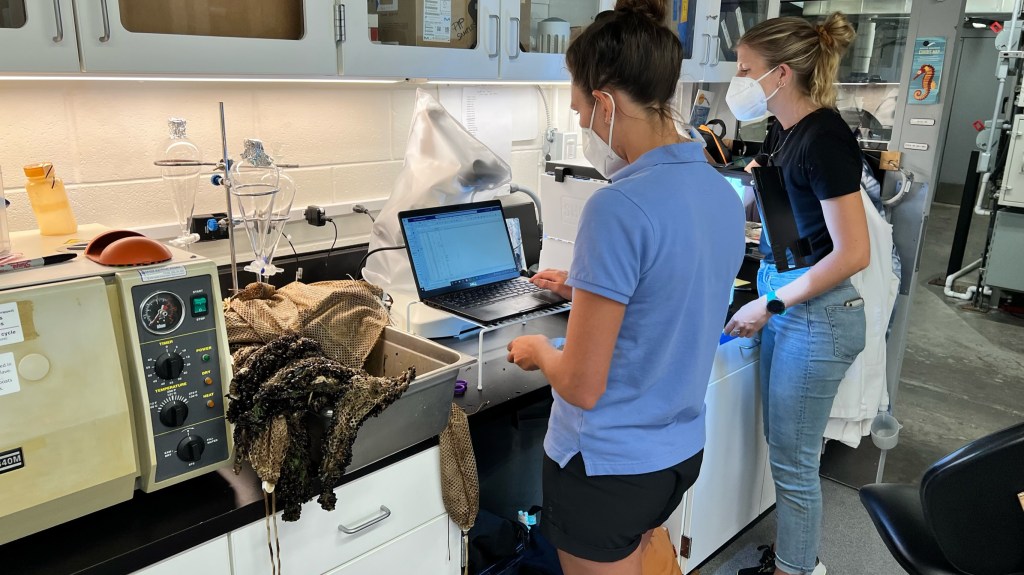

Test results were written into a final report and delivered to the prize’s scientific and technical advisory board. In first place is the American company Sway; with Zerocircle, based in India, in second; and Notpla, based in London, in third. All three developed seaweed-based plastic alternatives.

The TOM FORD Plastic Innovation Prize Early Adopter Coalition, consisting of several global companies (e.g. Nike, J. Crew, MillerKnoll) committed to test plastic-alternative products in their supply-chain to permanently eliminate their use of plastic film. From the scientific tests performed on products focusing on biological degradation at end-of-life performance, we hope to better understand what types of material can meet society’s need of durable, flexible, and degradable films and move towards turning off the tap.
Common, everyday commodity plastic bags (like the kind you currently find in store) were used as control samples to assess degradation rates of alternative (and proprietary) films. Five types of single-use film plastics (HDPE thin & thick, LDPE, PP, PE) were tested in conjunction with the TOM FORD Plastic Innovation Prize finalists, undergoing the same rigorous testing. None of the types of plastics examined fully degraded during the course of the 8 months study. Weathering time and depth significantly impacted many of the physical attributes of plastics, while exposure to a simulated whale gut did not.
This study, in combination with ubiquitous global plastic pollution, poses an interesting thought experiment: When is the optimal time to eat plastic in the Anthropocene? For different animals and feeding strategies, we imagine the answer to vary. For whales, it appears plastics weathered at the surface for long periods of time have degraded the most and may pose the least physiological risk.
 Lyda Harris, PhD
You must be logged in to post a comment.