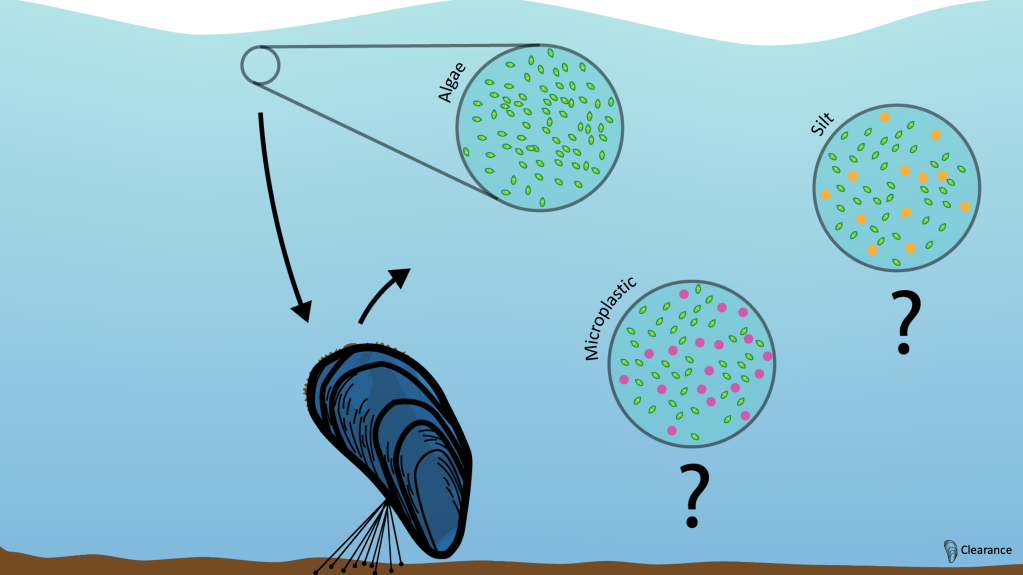
As filter-feeders, mussels are nature’s water purifiers—pulling algae and particles from the ocean to keep coastal waters clean and ecosystems healthy. But what happens when their environment is flooded with microplastics instead of natural particles like silt? We sought out to determine if there is a critical difference between microplastics and silt: mussels exposed to high concentrations of microplastics dramatically reduce their feeding, while those exposed to natural silt keep filtering as usual.
We tested the feeding rates—or clearance rates—of Mytilus trossulus mussels under three conditions: algae-only (a normal diet), algae + microplastics, and algae + silt. Over one hour, we tracked how efficiently each mussel filtered algae from the water—its “clearance rate.” Using a flow cytometer, we precisely measured particle concentrations in real time, capturing subtle shifts in feeding behavior.
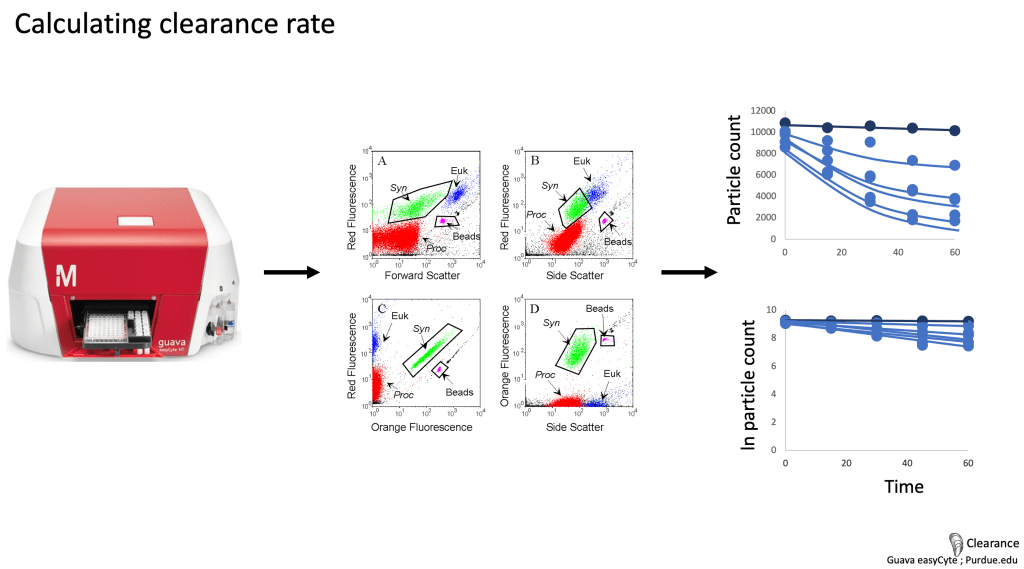
While mussels readily handled silt, exposure to microplastics at high concentrations slashed their clearance rate by more than 60%. This suggests that microplastics interfere directly with how mussels feed, not just by crowding the water with inedible particles, but potentially by mimicking food or triggering a stress response.

Mussels are key players in maintaining water quality and transferring energy through marine food webs. A slowdown in their filtering function could mean murkier waters, weaker nutrient cycling, and less food passed up the chain to larger animals. And while low levels of microplastic didn’t appear to affect feeding, pollution trends suggest concentrations could rise—pushing more mussels past that tipping point.
Bottom line: not all particles are created equal. This research underscores the unique and growing threat microplastics pose to marine life. As plastic production and runoff continue to increase, protecting filter-feeders like mussels means rethinking how we manage and reduce ocean-bound plastics.
 Lyda Harris, PhD
You must be logged in to post a comment.