How marine microplastic science and policy are spreading around the world
Plastics make up about 80% of all waste found in the ocean. While the problem is huge, our understanding of it—and what to do about it—is still catching up. Marine microplastic (MP) research is a relatively new field, but it’s growing fast. More scientists, countries, and institutions are getting involved every year. At the same time, governments are starting to take action by creating national policies to reduce plastic use and pollution.
Our goal was to see how both science and policy around microplastics have developed and spread over time. We wanted to know: Who’s doing the research? Who’s making the rules? And how do those efforts grow and move around the world?
To find out, we analyzed published studies and national plastic policies from 1900 to 2019. We tracked how both science and policy efforts grew over time and across different countries. We found that more countries have adopted national plastic policies than have actually conducted microplastic research.
Interestingly, both areas—research and policy—have seen sudden growth spurts. For microplastic science, the number of papers published started doubling every 1 to 4 years. And policy growth wasn’t far behind, doubling roughly every 3 to 4 years.
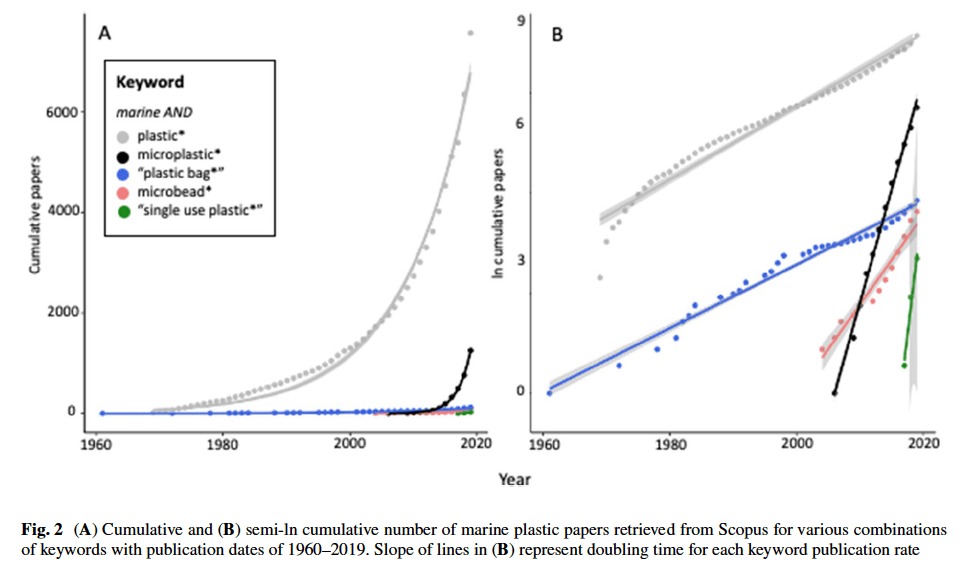
We also looked at how these ideas spread. Research tended to spread through a mix of scientists expanding their work locally and moving to new places—kind of like a ripple effect. Policies, on the other hand, spread mostly by expanding from one country to another, often inspired by their neighbors.

Bottom line: Both microplastic research and plastic-reducing policies are on the rise. Together, they’re helping us better understand the problem and work toward real solutions for cleaner oceans.
 Lyda Harris, PhD
You must be logged in to post a comment.